About the Malleefowl
Malleefowl are one of Australia's most extraordinary birds. They are engineers, thermometers, and survivors all in one, and they need our help.
What is a Malleefowl?
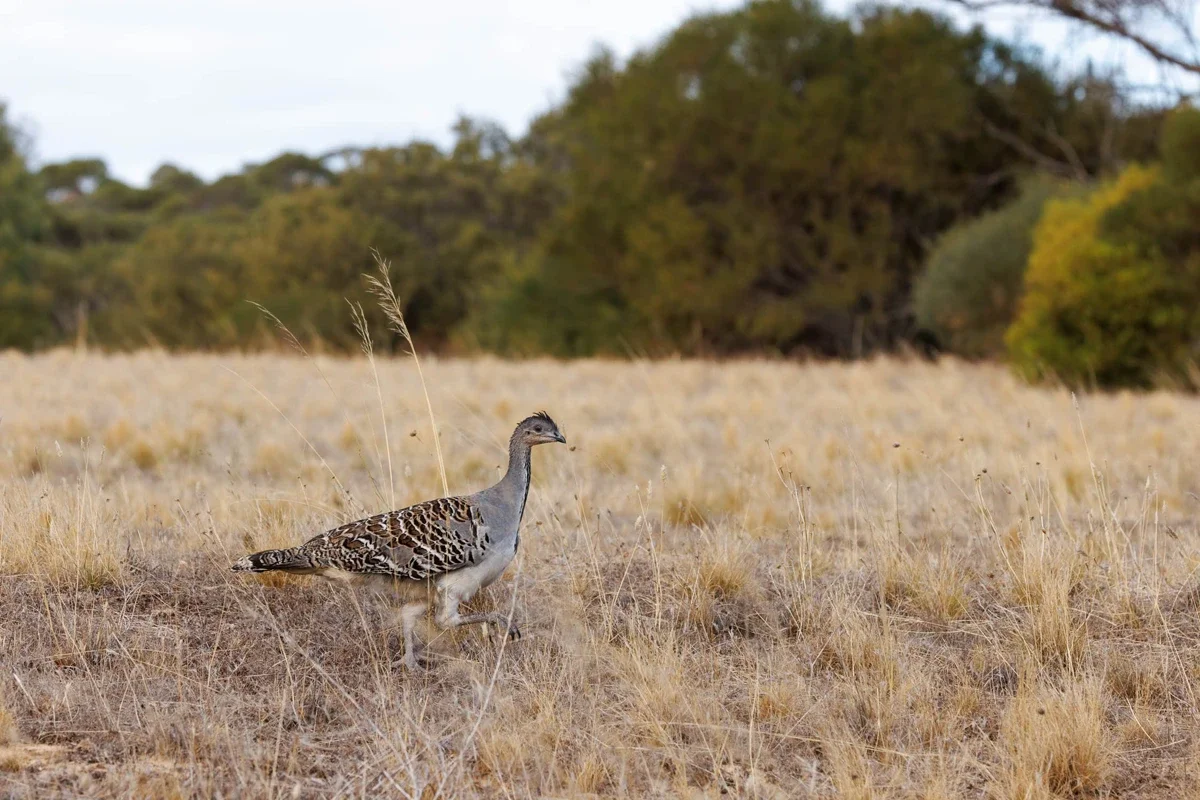
The Malleefowl (Leipoa ocellata) is a large, ground-dwelling bird found in the semi-arid mallee scrublands of southern Australia. Roughly the size of a domestic chicken, it is one of only three mound-building birds in Australia (known as megapodes) and the only one in the world that lives and breeds in an arid environment.
What makes Malleefowl truly remarkable is their approach to incubation. Rather than sitting on their eggs, pairs construct enormous nest mounds from leaf litter and sandy soil, using decomposing vegetation to generate heat. A single mound can be up to 5 metres wide and 1 metre high, and must be maintained at a precise internal temperature of 33 degrees Celsius throughout the breeding season.
The male spends up to nine months a year managing the mound, adding or removing material to regulate temperature, using his bill to sense warmth in the sand. It is one of the most sophisticated thermal regulation behaviours known in any bird.
Malleefowl are found across semi-arid southern Australia, from western Victoria and South Australia through to the south-west of Western Australia, with a separate population in western New South Wales. Within the past century their range has contracted significantly, and many populations that once extended as far south as the Brisbane Ranges and Melton in Victoria have disappeared entirely.
Life cycle
Females lay large eggs, each weighing around 10% of their own body weight, at intervals of roughly one week throughout the breeding season. A clutch typically contains around 15 eggs, though it can range from 2 to over 30 depending on rainfall and conditions.
Incubation takes between 50 and 100 days. When chicks hatch, they must dig their own way to the surface through up to a metre of sand, a struggle that can take many hours. Once they emerge, they receive no parental care whatsoever. Malleefowl chicks are immediately independent and can fly within a day of hatching.
Malleefowl are shy and solitary, relying on their intricately patterned plumage to stay hidden. Their colouring is so effective that a bird can be within two metres of an observer and remain invisible. Pairs are thought to mate for life and occupy large, stable home ranges.

Watch
The Amazing Malleefowl
Filmed by NMRG's Dr Joe Benshemesh over many years in the field, this video is the best introduction to the Malleefowl's remarkable life story.
Conservation status
Threats to Malleefowl
The Malleefowl is listed as Vulnerable under both the Australian Commonwealth's Environment Protection and Biodiversity Conservation Act 1999 and the IUCN Red List. Within the past century the species has experienced a marked reduction in range, and population trends in South Australia and Western Australia remain in decline. Three key threats are driving this.
Habitat loss and fragmentation
Land clearing for agriculture has removed large areas of mallee scrubland across southern Australia. Remaining habitat is increasingly fragmented, isolating populations and reducing genetic diversity. Malleefowl depend on mature, unburnt scrubland. Research shows breeding activity is highest in areas unburnt for more than 20 to 40 years. Frequent or extensive fires significantly reduce habitat suitability.
Introduced predators
The introduction of European red foxes and feral cats since the 1800s has been a significant driver of Malleefowl decline. Adults are vulnerable on the ground, eggs can be raided from mounds, and chicks are almost entirely defenceless upon emerging from the nest. Predator control is a core component of the NMRG's Adaptive Management program, and research into its effectiveness is ongoing.
Climate change
Malleefowl are acutely sensitive to temperature and rainfall. Their mound incubation system depends on winter rains to saturate leaf litter and trigger decomposition, and on maintaining a stable internal temperature throughout summer. Reduced and more variable rainfall, longer dry periods, and more frequent extreme heat events all disrupt breeding success. Climate change represents a long-term threat that will require ongoing adaptation in conservation strategies.
Help save the Malleefowl
Volunteers are the backbone of our monitoring program. Whether you're in the field or at a computer, there's a role for you. Learn more about our projects and how to get involved.
What we're doing to help
Australia's largest single-species monitoring program
Since Dr Joe Benshemesh established the first monitoring sites in Victoria in 1987, what started as a small field program has grown into one of the most comprehensive citizen science efforts for any single species in Australia. By 2022, over 3,800 mounds were being monitored annually across more than 100 sites in Victoria, New South Wales, South Australia, and Western Australia.
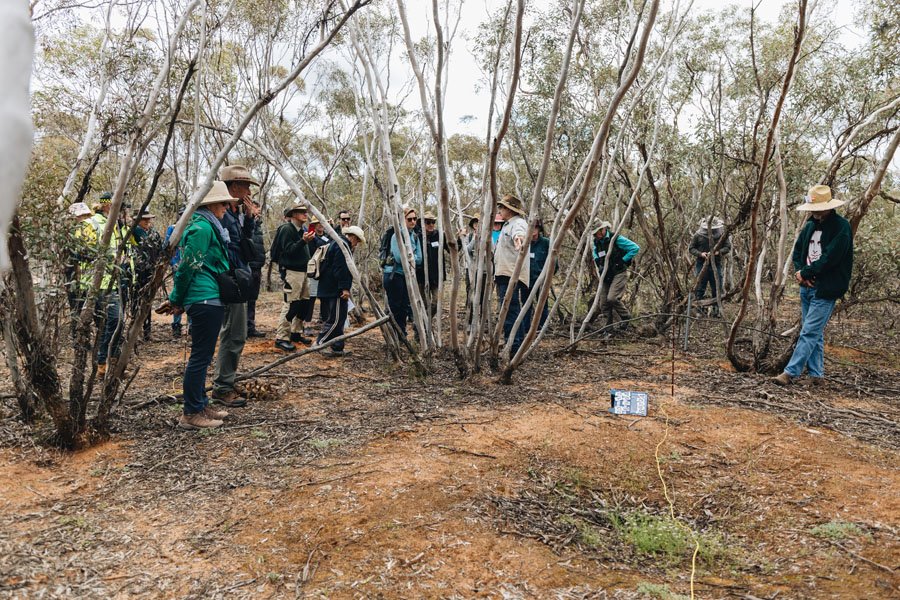
The NMRG coordinates monitoring using consistent methods across all regions, which makes it possible to detect genuine population trends rather than local variation. Volunteers visit mounds each year to record activity, photograph sites, and enter data into a national database. This data directly informs conservation management decisions, identifying where populations are struggling and measuring the effectiveness of predator control and fire management programs.
Beyond monitoring, the NMRG leads research into the effects of predator control, habitat fragmentation, genetic health, and LiDAR-based mound detection. We work with land managers, farmers, universities, and government agencies to put science into action.