Camera Trap Studies: Do Malleefowl use habitat links and restored habitat?
A camera-trapping study to understand how often Malleefowl move through habitat corridors and make use of restored vegetation, essential knowledge for building effective landscape connectivity.
Project at a glance
Project Aim
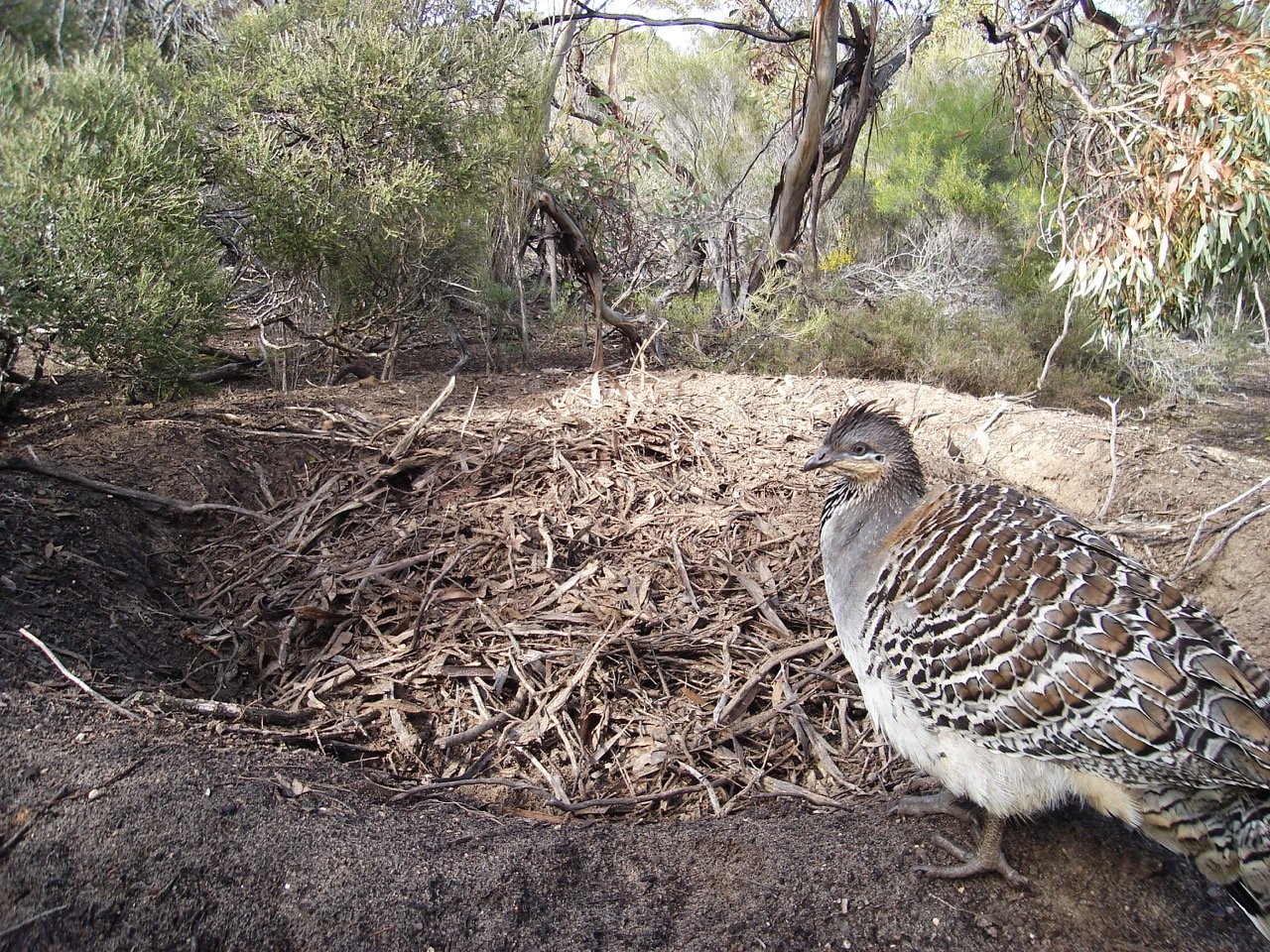
Use camera-trapping to quantify how frequently Malleefowl and other animals use habitat links and restored habitat areas across the species' range.
Background
Isolated populations are vulnerable to various threats, of which inbreeding depression is perhaps the most insidious and damaging. Habitat linkages and corridors can reduce the genetic isolation of Malleefowl populations, but their effectiveness depends on the frequency and timing of use by the birds, as well as the destinations of these corridors and the vulnerability of Malleefowl along these routes.
Understanding how often Malleefowl disperse along corridors is not well known, but this information is critical to planning effective linkages between occupied sites. Similarly, whether and how often Malleefowl make use of restored habitat is largely unknown, yet this is vital for conservation planning and investment decisions.
How This Benefits Malleefowl
Malleefowl use of linkages and restored habitat represents a vital gap in the information needed to develop sustainable management plans. Habitat linkages are common practice in conservation, but evidence for their effectiveness specifically for Malleefowl is lacking, and despite best intentions, corridors may be ineffective or even counterproductive for small isolated populations if not properly designed.
A better understanding of what constitutes an effective genetic link, and when and how Malleefowl actually use them, will greatly assist in developing sustainable populations throughout the species' range. The need for genetic management of fragmented Malleefowl populations is highlighted in the newly updated National Recovery Plan for Malleefowl, released in 2024.